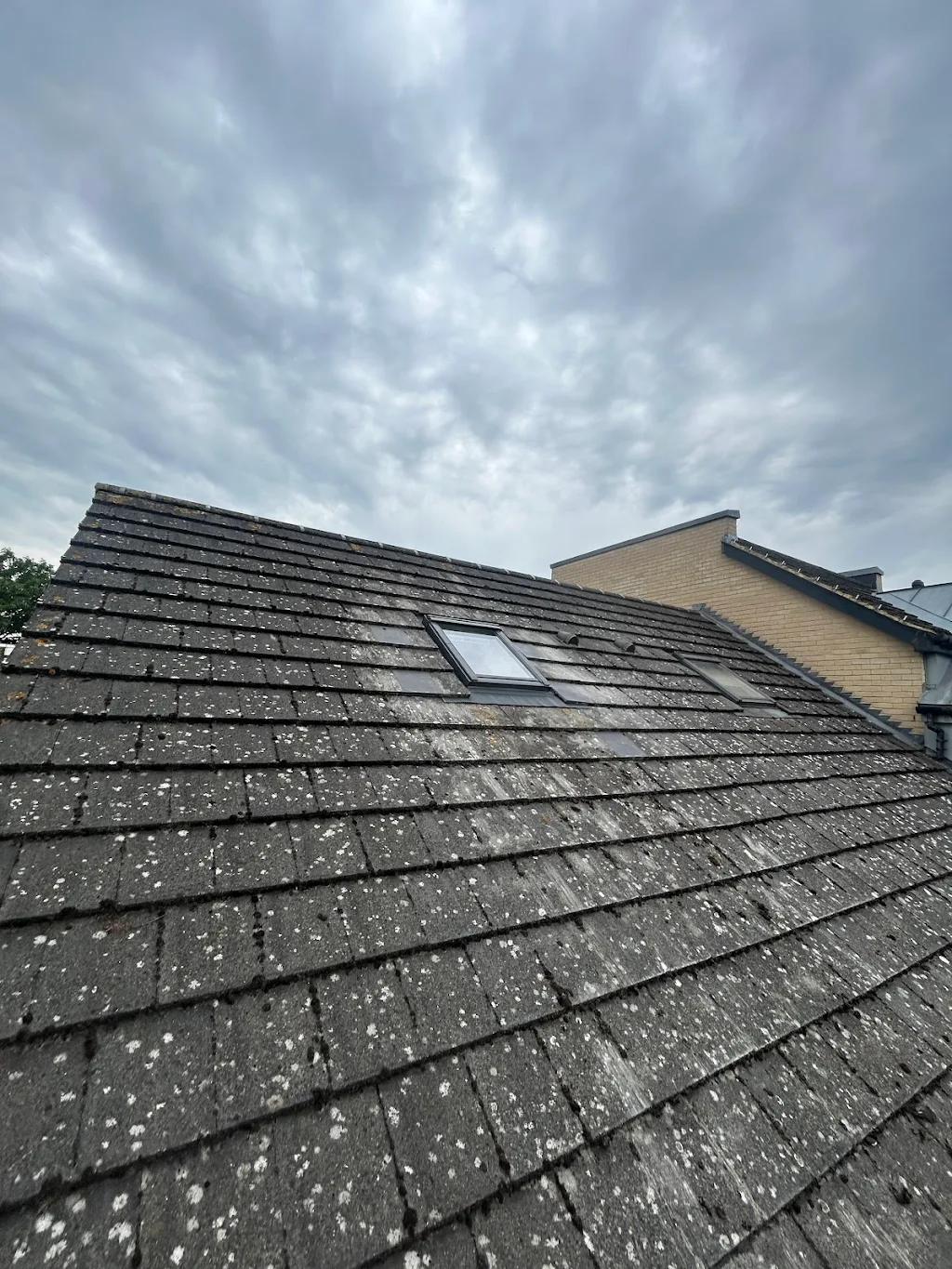
In most cases, you don't need planning permission to replace your roof if you use the same or similar materials and don't change its shape or height. This is covered by permitted development rights. The exceptions are listed buildings, some conservation areas, flats, and any job that changes how the roof looks or adds to it.
Planning permission is also only one of three separate things to think about. Building regulations and, on terraced and semi-detached houses, the Party Wall Act can apply even when planning permission isn't needed. This guide covers all three, plus how to check your own property in Croydon, Bromley and Surrey.
This is general guidance for houses in England. Rules can change and every property is different, so always check with your local council before starting work.
When you don't need planning permission
Re-roofing a house usually doesn't need planning permission if:
- the new covering is the same as, or similar in appearance to, the existing one
- the height and shape of the roof don't change
- nothing projects more than 150mm from the existing roof slope (relevant to roof lights and solar panels)
- the house isn't listed, and isn't affected by an Article 4 direction or a planning condition that removes these rights
Replacing old concrete tiles with new concrete tiles, or natural slate with natural slate, is a typical example.
When you do need planning permission
Conservation areas and Article 4 directions
Living in a conservation area doesn't automatically mean you need permission for a like-for-like re-roof. But councils can make an Article 4 direction, which removes some permitted development rights in a particular area. Where one applies, even small changes, such as swapping natural slate for concrete tiles or adding a roof light on the front slope, may need planning permission. Croydon, Bromley and the Surrey boroughs all have conservation areas, so it's worth checking.
Listed buildings
If your home is listed, you'll need listed building consent for almost any work that affects its character, including re-roofing in different materials. Carrying out work without consent is a criminal offence, so always speak to the council first.
Changing the look, height or shape
Planning permission may be needed if you want to raise the roof, change its shape, or use a material that looks noticeably different. Loft conversions with dormers have their own set of permitted development rules, and many need planning permission, especially at the front of the house.
Flats and maisonettes
Permitted development rights for householders apply to houses only. If you live in a flat or maisonette, re-roofing that changes the appearance of the building is more likely to need permission. You'll usually need the freeholder's consent too.
Flat roofs
Replacing a flat roof covering on an extension or garage is usually fine without planning permission. Raising the roof height to fit insulation on top (a warm roof) can occasionally be an issue if the extension is close to limits or boundaries, so mention it at the survey.
Building regulations are a separate question
Even if you don't need planning permission, building regulations can still apply. Under current rules, replacing more than 25% of a roof's covering is usually treated as renovation, which normally means the roof must be brought up to modern insulation standards where it is practical to do so. Building regulations also apply if the work changes the roof structure, or if the new covering is significantly heavier than the old one, for example swapping lightweight slate for heavy concrete tiles.
Building regulations work is signed off either by the council's building control team or through a government-approved competent person scheme. Ask your roofer how they'll handle this before work starts.
Party walls on terraced and semi-detached houses
If you live in a terrace or semi, your roof meets your neighbour's roof over a party wall. The Party Wall etc. Act 1996 can apply to some roofing work on or near that wall, such as cutting into it or raising it. A straightforward re-roof that doesn't touch the party wall often won't need a formal notice, but it's good manners, and good sense, to tell your neighbours before scaffolding goes up.
Bats
Bats and their roosts are protected by law, and older roofs are a common roosting spot. If there's any sign of bats in your loft or roof, you may need a bat survey before the work goes ahead. If bats are found during the job, work has to stop while you get advice. Natural England publishes guidance on what to do.
How to check your property in Croydon, Bromley and Surrey
- Search your council's website for its conservation area map. Croydon, Bromley and each Surrey borough publish a list and map of their conservation areas, along with any Article 4 directions.
- Check whether your home is listed using the National Heritage List for England on the Historic England website.
- Read the Planning Portal guidance on roofing and permitted development at planningportal.co.uk.
- Check your deeds and any past planning permissions for conditions that restrict alterations or materials.
- If you're still unsure, ask the council. You can apply for a Lawful Development Certificate for formal confirmation that the work doesn't need planning permission.
We work across Croydon, Bromley and Surrey and are used to advising on local requirements. We'll flag anything that needs checking at your free survey.
Frequently asked questions
Can I change from concrete tiles to slate without planning permission?
Outside a conservation area, on a house that isn't listed, this is often allowed under permitted development if the appearance is not significantly different. In a conservation area with an Article 4 direction, or on a listed building, it will probably need consent. Check with your council first.
Do I need planning permission to add a roof light?
Usually not, as long as it doesn't stick out more than 150mm from the roof slope and isn't higher than the highest part of the roof. Side-facing roof lights may need obscure glazing. Different rules apply in conservation areas and on listed buildings.
Does replacing a roof need building regulations approval?
If you're replacing more than a quarter of the roof covering, it usually does, and the roof will normally need upgrading to modern insulation standards. Small repairs don't. Read our guide to whether to repair or replace your roof, or see our roof installation service to book a free survey.