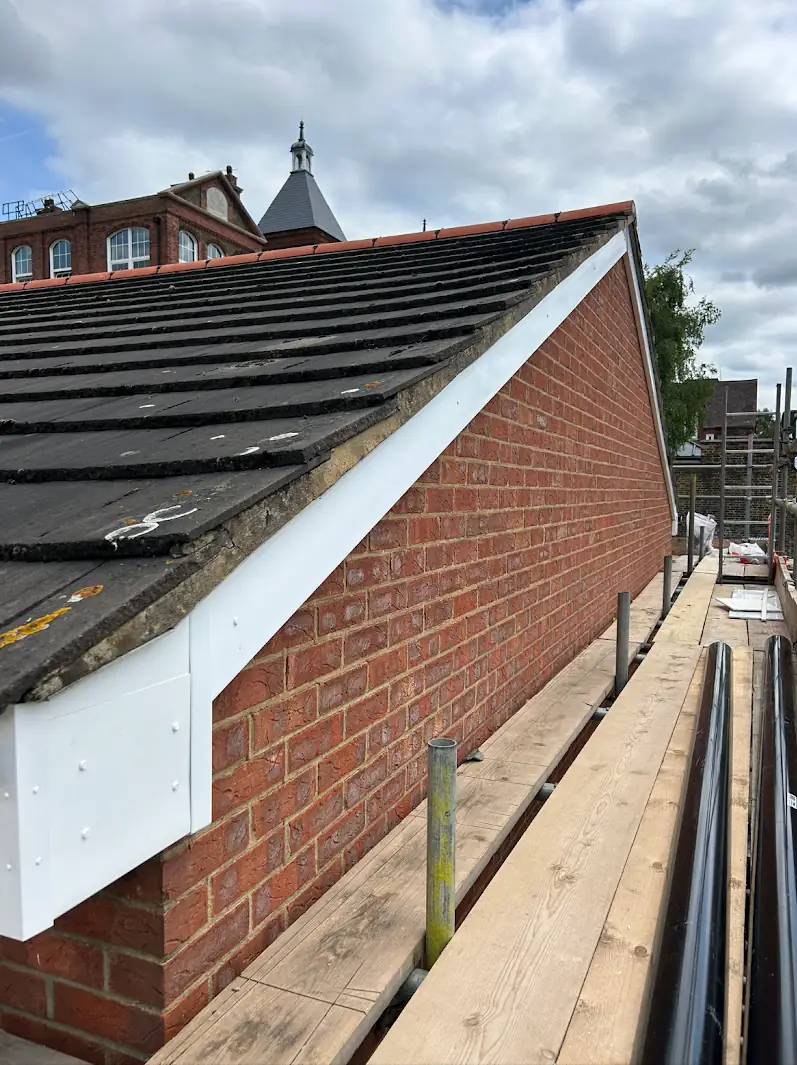
Roof repair or replacement is one of the biggest decisions a homeowner makes about their house, and it's easy to feel pushed one way or the other. Here is the honest answer: if the problem is in one area and the rest of the roof is sound, a repair is usually right. If the roof keeps leaking in different places, the underlay has failed, or the slates or tiles are failing across the roof, replacement is usually the better investment.
This guide explains how to tell the difference, the middle-ground options many people don't know about, and how to check a quote that says you need a new roof.
When a roof repair is the right call
A repair is usually the right choice when:
- the damage is in one area, such as a few slipped slates or one section of flashing
- the problem has an obvious cause, like storm damage or a blocked valley
- the rest of the roof covering is in good condition
- the underlay in the loft is intact
- the roof hasn't needed repeated repairs in recent years
Common examples are replacing slipped slates, re-dressing lead flashing, re-bedding or dry-fixing a ridge, repointing a chimney, or patching a localised split on a flat roof. A good repair on a sound roof can give you many more years of service. Our roof repairs service covers all of these.
Signs your roof needs replacing
Leaks keep coming back in different places
One leak is a repair. A roof that leaks in a new place every winter is telling you the whole covering is reaching the end of its life. Chasing individual leaks on a failing roof costs more over time than replacing it.
The underlay has failed
Go into the loft. If the underlay is brittle, torn, sagging or missing, or you can see daylight through the roof in several places, the roof's second line of defence has gone. Underlay can only be replaced by stripping the tiles or slates, so this usually means a re-roof.
Slates or tiles are failing across the roof
Lots of slipped slates across the roof, especially on older Victorian roofs, usually means the nails holding them have rusted through. This is known as nail fatigue. Once it starts, more slates will follow. Similarly, concrete tiles that are crumbling or clay tiles that are flaking across the roof won't be saved by replacing a few.
The roof is sagging
A dip or sag in the roofline can mean the timbers underneath are overloaded, rotten or weakened. This needs a proper inspection, and may involve structural work as part of a new roof.
A flat roof is failing all over
On a flat roof, widespread cracking, blistering, ponding water and repeated leaks point to replacement. If the deck feels soft or spongy underfoot, the boards underneath have probably rotted and will need replacing too.
The middle ground: partial re-roofs and reusing slates
It isn't always all or nothing. Depending on the roof, options include:
- Re-roofing one slope. If the back slope takes the worst of the weather and has failed, it can sometimes be done on its own.
- Stripping and re-laying. On a good-quality natural slate roof where the slates are sound but the nails and underlay have failed, the slates can sometimes be carefully removed, new battens and breathable underlay fitted, and the good slates re-laid with any damaged ones replaced.
- Upgrading the details. Fitting a dry ridge and dry verge system during a repair removes the mortar that tends to crack and fall out.
Whether these work depends on the condition of the materials, which is something we assess at the survey.
Pitched roofs versus flat roofs
Pitched roofs covered with slate or tile often last for many decades, and individual parts can be repaired for a long time. Flat roofs work differently. The waterproof layer covers the whole roof, so once it has aged across the surface, repairs become short-term fixes. Older single-layer felt roofs on 1960s and 70s extensions are often at this stage now. Our guide to GRP, felt and liquid flat roofs explains the replacement options.
How to check a quote that says you need a new roof
A new roof is a big spend, so it's reasonable to ask for evidence. A good roofer will be happy to:
- Show you photos of the problems they found, taken on your roof
- Explain what has failed and why a repair won't last
- Tell you what a repair would involve and how long it might last, so you can compare
- Put everything in writing, with an itemised quote and a written guarantee
Be wary of anyone who knocks on your door saying they've spotted a problem with your roof, pushes for a decision on the day, or asks for a large cash deposit up front.
At Hills Roofing Ltd, Connor carries out every survey himself. You get an honest assessment, photos of what we find, and a written, itemised quote within 24 to 48 hours. If a repair will do the job, we'll tell you. If you do need a new roof, see our roof installation service.
Frequently asked questions
How long does a roof last?
It depends on the material, how well it was installed, and how exposed the house is. Natural slate and clay tiles can last for many decades, concrete tiles a little less, and older felt flat roofs much less. The fixings and underlay often fail before the slates or tiles themselves.
Can I replace just one side of my roof?
Sometimes. If one slope has failed and the other is sound, replacing one slope can make sense. The two sides need to match where they meet at the ridge, and in a conservation area the materials may need to match the existing roof.
Does a new roof need planning permission or building regulations approval?
Like-for-like replacement usually doesn't need planning permission, but replacing more than a quarter of a roof normally needs to meet building regulations. Read our guide to planning permission for a new roof. If you're dealing with a leak right now, start with why roofs leak.