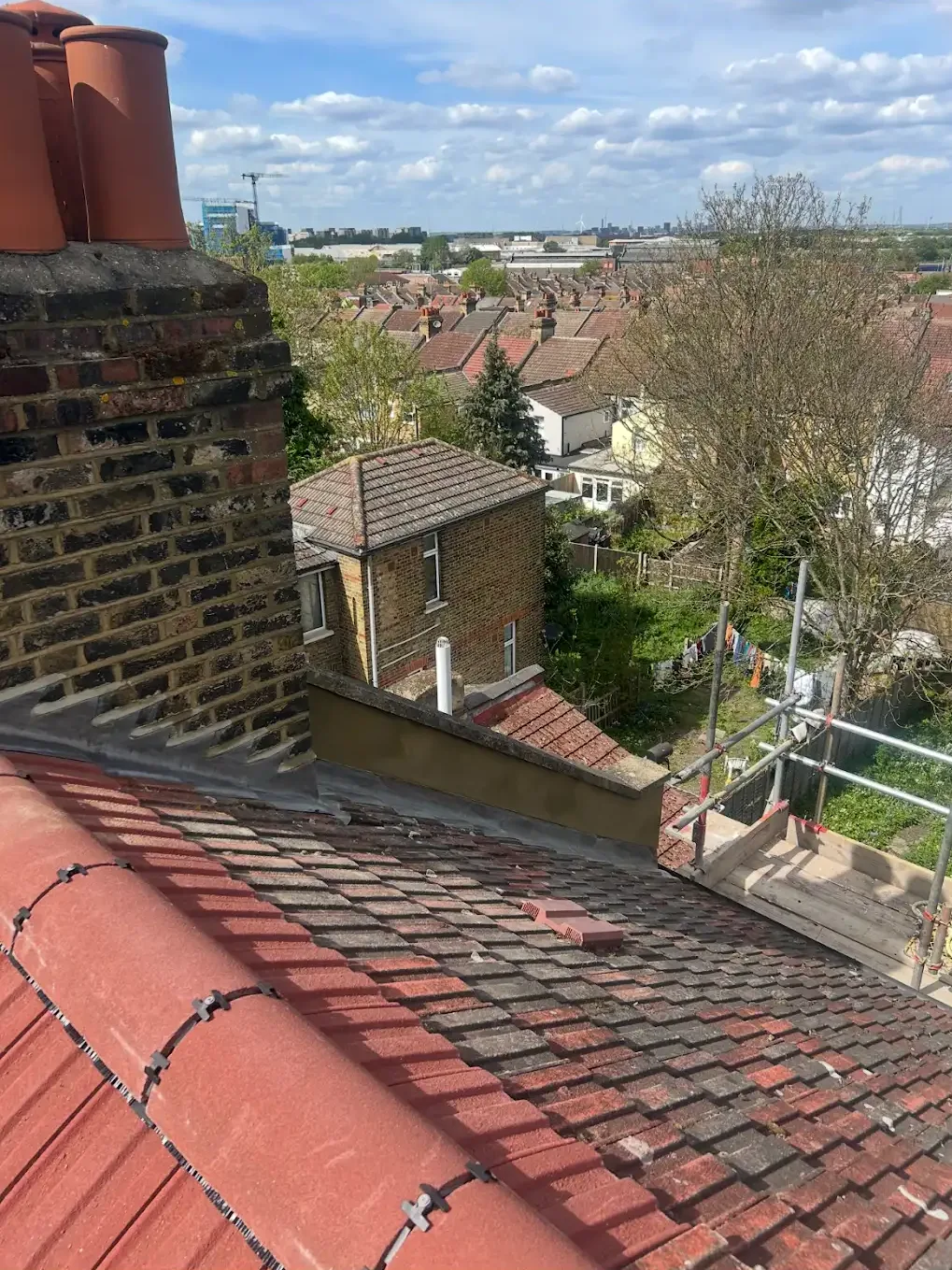
Home insurance will usually cover a leaking roof if the leak was caused by a sudden, one-off event such as a storm or a falling tree. It usually won't cover a leak caused by wear and tear, gradual deterioration or poor maintenance. Most of the roof leaks we're called out to fall into the second group, so it's worth knowing where the line is before you make a claim.
This guide explains what is normally covered, what isn't, and what to do so a genuine claim has the best chance of being paid. Every policy is different, so always check your own policy wording.
Buildings or contents insurance?
The roof is part of the structure of your home, so damage to the roof itself falls under buildings insurance. Damage to ceilings, plaster and decoration inside is usually a buildings claim too. Damage to your belongings, such as carpets, furniture and electronics, falls under contents insurance.
If you own a flat, the buildings insurance is usually arranged by the freeholder or managing agent, so report the leak to them. If you rent, the landlord is responsible for the roof and the buildings insurance, and your own contents policy covers your belongings.
When a leaking roof is usually covered
Storm damage
Storm damage is the most common successful roof claim. High winds lift and break tiles, strip ridge tiles and lead flashing, and bring down chimney pots. Insurers define a storm in different ways, but many look for strong wind gusts of around 50 to 55mph or more, very heavy rain, or heavy snow. If your roof was damaged during a named storm or a spell of severe weather, write down the date. Our storm roof risk checker shows the gusts forecast for the week ahead.
When it reviews storm complaints, the Financial Ombudsman Service asks three questions:
- Were there storm conditions on or around the date the damage happened?
- Is the damage the kind a storm typically causes?
- Was the storm the main cause of the damage, rather than something that was already wrong with the roof?
The third question is where most roof claims fail. If a storm simply exposed an existing weakness, such as rusted slate nails or crumbling ridge mortar, the insurer may decide wear and tear was the real cause.
Fallen trees, branches and impact damage
A tree or large branch falling on your roof is normally covered, as is damage from something like a falling aerial or a neighbour's chimney stack. Some policies class this as storm damage and some as impact or accidental damage, but it is usually covered either way.
Water from inside the house
If the "leak" is actually coming from a burst pipe or a split water tank in the loft, that is usually an escape of water claim, not a roof claim. Escape of water is a standard part of most buildings policies, although the excess is often higher. Our guide to why roofs leak explains how to tell a roof leak from condensation and other causes.
When a leaking roof usually isn't covered
- Wear and tear. Roofs wear out. Slates slip when their nails rust through, mortar on ridges and chimneys crumbles, and felt on flat roofs splits with age. Insurers treat this as maintenance, not an insured event.
- Gradual damage. A slow leak that has been getting worse for months, and the rot or mould it causes, is usually excluded.
- Poor maintenance. Blocked gutters that overflow into the eaves, or a known problem left unrepaired, can lead to a claim being refused or reduced.
- Poor workmanship. If a previous repair or installation was done badly, the claim is usually against whoever did the work, not your insurer.
Some policies also have specific conditions for flat roofs, so check the wording if your leak is under a flat roof extension, garage or dormer.
What to do if your roof is leaking
- Stop further damage. Your policy expects you to take reasonable steps to limit the damage. Contain the water, move belongings, and get the roof made watertight. Our emergency roofing service can fit a temporary repair while the claim is sorted out.
- Take photos and video of the damage inside and any visible damage outside, before anything is cleared up. Keep any broken tiles or slates that come down.
- Note the date and the weather. If it was a storm, write down when it happened.
- Keep every receipt. Reasonable emergency repair costs are often covered as part of a valid claim.
- Contact your insurer early. Most policies require you to report damage promptly. Ask whether they want to send a loss adjuster before permanent repairs start.
- Get a written report from a roofer. Insurers usually ask for a report on the cause of the damage and a quote for the repair.
Why an honest roofer's report matters
The roofer's report is often the most important document in a roof claim. It should describe the damage, explain the cause, and include photos. A good report helps a genuine storm claim, but it has to be honest. If the real cause is wear and tear, a report blaming the storm won't survive a loss adjuster's visit, and a claim found to be exaggerated can be refused outright and make future insurance harder to get.
We provide written reports with photos for roof damage across Croydon, Bromley and Surrey. If the damage is storm related, we'll say so and explain why. If it's age related, we'll tell you that too, along with the most cost-effective way to fix it.
Is it worth claiming?
Check your excess first. Many buildings policies carry an excess of a few hundred pounds, and a small repair such as refixing a few slipped tiles may cost less than that, or not much more. A claim can also affect your premium and your no-claims discount. For a minor repair, paying directly is often the better choice. For larger storm damage, such as a stripped section of roof or a collapsed chimney stack, a claim usually makes sense.
What if your claim is refused?
Ask the insurer to explain the decision in writing, including which policy exclusion they are relying on. If you disagree, make a formal complaint to the insurer. If you're still unhappy with their final response, or they haven't replied within eight weeks, you can take the complaint to the Financial Ombudsman Service, which is free to use. You normally have six months from the insurer's final response to do this.
Frequently asked questions
Does home insurance cover a roof leak caused by rain?
Rain alone usually isn't enough. The insurer will want to know why the rain got in. If a storm damaged the roof and rain came through the gap, that may be covered. If rain got in through worn tiles, failed flashing or a split flat roof, it usually won't be.
Will insurance pay for a new roof?
Rarely. Insurers pay to put right the damage caused by an insured event, which is usually a repair to the affected area. They won't normally pay to replace a roof that was already near the end of its life. If you're weighing up the two, read our guide to whether to repair or replace your roof.
Do I need to wait for the insurer before calling a roofer?
No. Get the roof made safe and watertight straight away to stop further damage, and keep the receipts and photos. For permanent repairs, check with your insurer first, as they may want to inspect the damage.
Can you help with my insurance claim?
We can provide a written report on the cause and extent of the damage, with photos, and a detailed quote for the repair. That is usually what insurers ask for.
Need a leak found and fixed, or a written report for your insurer? Hills Roofing Ltd provides roof repairs in Croydon, Bromley and Surrey, with every job managed personally by Connor Hill.